

Myki and public transport in Melbourne: Complete guide for newcomers (2026)
Everything you need to know about trains, trams and buses in Melbourne — how to pay, how much it costs, and the tricks only locals know.
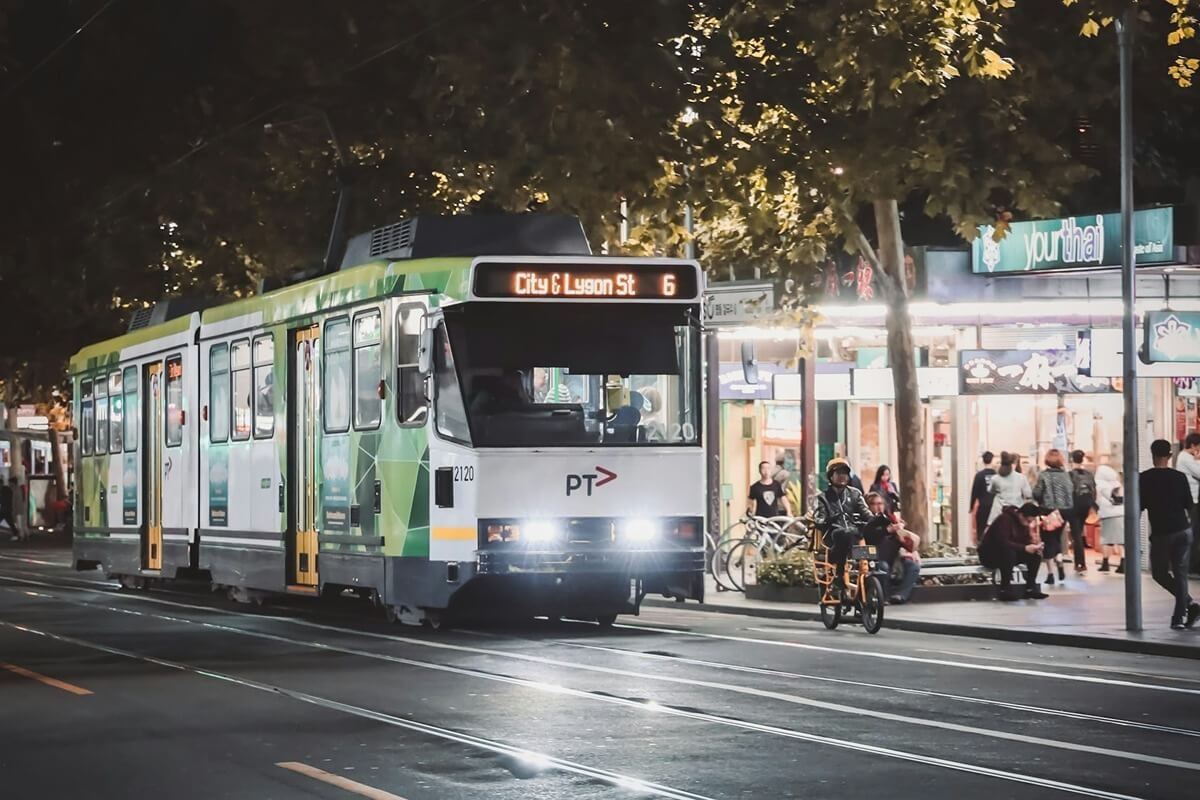
In my opinion, Melbourne has the best public transport system of any Australian city. Well connected, fairly reliable (with the occasional exception), and once you get the hang of it, you can get around with your eyes closed.
But when you first arrive, it can be confusing. What is the Myki? Why are some trams free and others aren't? Do I need to touch off when I get off or not? Even people who have lived here for years sometimes make mistakes — I spent way too much time on trams going in the wrong direction when I first arrived.
This guide covers everything you need to know to get around Melbourne from day one, with fares and updates current as of 2026.
The basics: trains, trams and buses
Melbourne's metropolitan transport system covers a large area of the city and its suburbs. There are three types of vehicles:
Trains — ideal for getting quickly from the suburbs into the city centre
Trams — cover the CBD and areas not reached by train
Buses — connect areas with no access to train or tram
On some routes you can choose between two or three options. On others, there's only a bus. But all three have one thing in common: they all use the same payment card, the Myki.
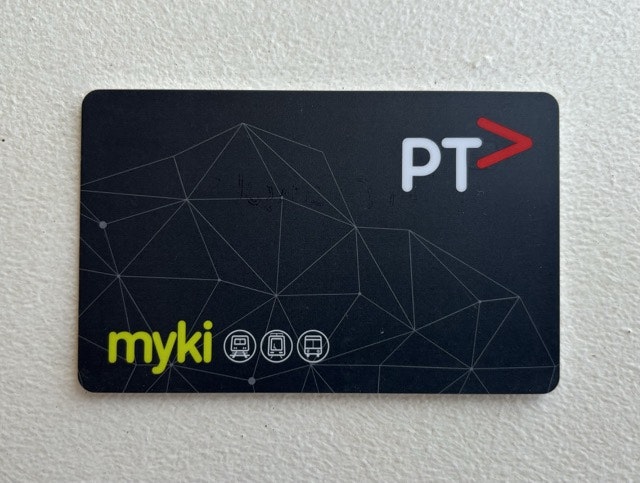
The Myki card: your pass for everything
The Myki is a rechargeable card, the size of a credit card, that registers your payment every time you use public transport. At the entrance of every train station, and at the door of every tram or bus, there is a device with a screen and sensor. You simply tap your card to activate it — this is called "Touch On".
Where do I get a Myki?
You can buy one at:
Train stations (at the ticket machines)
7-Eleven stores
Authorised retailers displaying the Myki logo
Cost of the physical card:
Adult card: $6 AUD
Concession card: $3 AUD
Youth card (under 18s): $5 AUD (new from 2026 — see updates section)
How do I use it?
Touch On when boarding any form of transport
Touch Off when getting off the train (required to exit through the gates)
On trams and buses Touch Off is no longer required, unless you're travelling entirely within Zone 2 — in that case you should touch off to make sure you're charged the cheaper fare
⚠️ Classic newcomer mistake: topping up your card and assuming you've paid for your trip. That's not how it works. You must Touch On for the system to register your payment. Without that step, you can be fined even if you have credit on your card.
Should I register my card?
I strongly recommend registering your Myki on the PTV app or the Transport Victoria website as soon as you get it. If you lose it and it's registered, you can recover your balance. If it's not registered, you lose all the money on it.
If you lose your card, go to the PTV Hub at Southern Cross station and they will replace it with the balance you had — only if it was registered.
How to top up and how much it costs (2026 fares)
There are two ways to load your Myki, depending on how often you use public transport:
Myki Money — for occasional travel
You top up your card and pay per trip. The system automatically calculates the cheapest fare based on the zones you travel through and the time it takes.
Key things to know:
When you Touch On, a 2-hour travel window opens
Within those 2 hours you can switch between train, tram and bus and only be charged one fare
There is a daily cap — if you use transport more than once a day, you'll never pay more than that maximum
You can top up via the PTV app, at station machines or at 7-Eleven
If your balance goes negative, you must clear that amount before you can use a new top-up
| Fare type | Zone 1/ Zone 1 + Zone 2 | Zone 2 only |
|---|---|---|
| Full fare (2h) | $5.70 | $3.50 |
| Concession (2h) | $2.85 | $1.75 |
| Full daily cap | $11.40 | $7.20 |
| Concession daily cap | $5.70 | $3.60 |
| Fare type | Full fare | Concession |
|---|---|---|
| Daily cap | $8.00 | $4.00 |
Myki Pass — for frequent travel
If you use public transport every day or almost every day, a Myki Pass will save you money. You pay for periods of unlimited travel: 7 days, 28 days, or up to 365 days. The longer the pass, the bigger the discount.
| Period | Full fare | Concession |
|---|---|---|
| 7 days | $57.00 | $28.50 |
| 28-325 days (daily rate) | $6.84/day | $3.42/day |
| 325+days (annual daily rate) | aprox. $2.223/year | aprox. $1.111/year |
Key things to know:
Time starts running from your first Touch On
If you had Myki Money credit, the card saves it and uses the Myki Pass first
If you leave the country before your pass expires, you can apply for a refund on the unused time
2026 updates you need to know
1. Free travel for under 18s 🎉
From January 2026, all children and teenagers under 18 travel free on public transport across Victoria. They just need a youth Myki card ($5). If you're moving to Melbourne with kids or teenage family members, this is great news for your monthly budget.
2. Pay with credit or debit card
Contactless payment with credit or debit card (Visa, Mastercard, American Express) — including cards stored on your phone or smartwatch — is being rolled out across the network. This means on many readers you no longer need a physical Myki card to travel. Particularly useful when you've just arrived and haven't got your Myki yet.
3. Digital Myki on Android
You can now use a digital Myki through Google Wallet on Android phones. No physical card, no queuing at 7-Eleven.
Trains
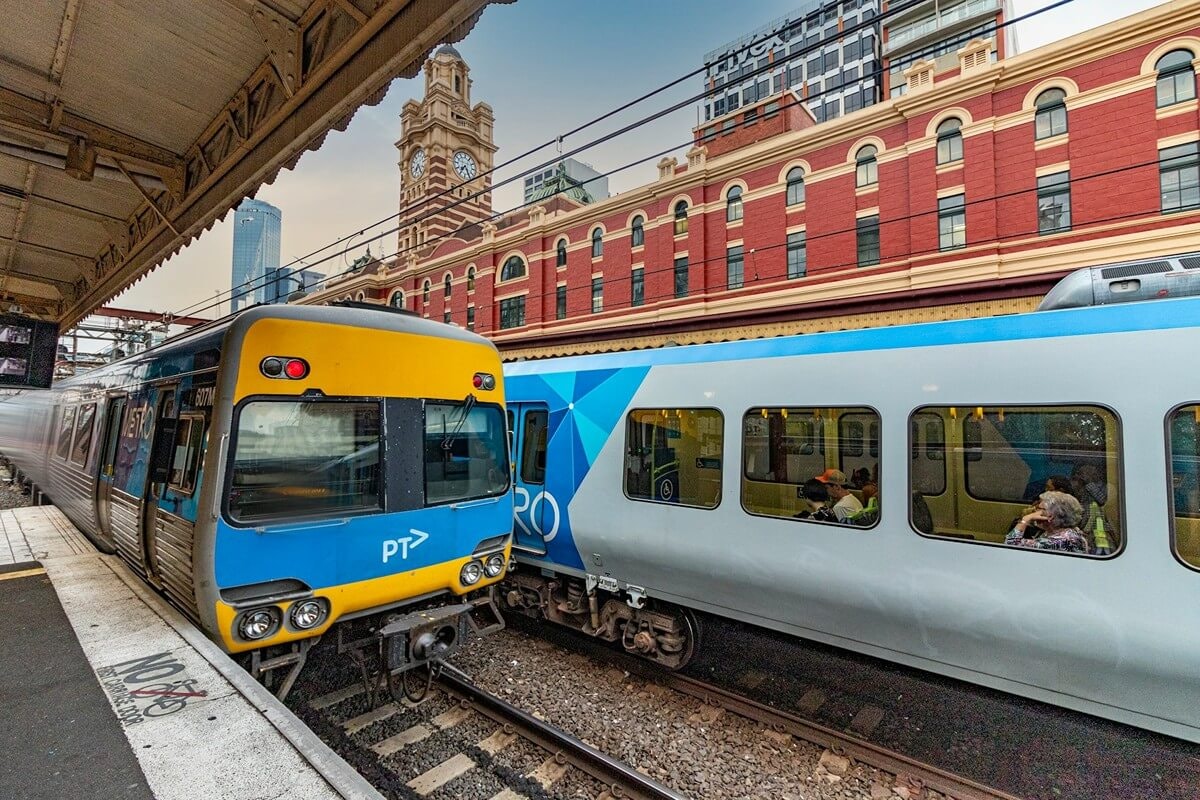
Best for: getting from the suburbs into the city quickly and reliably. This is how most Melburnians commute to work every day.
Watch out for:
Line closures for track works, especially on weekends
If you have an important commitment, leave extra time — delays aren't frequent but they do happen
Something important to know: trains don't connect directly between eastern and western suburbs. If you need to travel across the city without going through the centre, trams or buses are often the more direct option. By train, you'll need to come into the CBD first and change lines.
Make sure you Touch On even at stations with no security gates — most suburban stations have open entries, but the card reader is on the side of the entrance. Without a Touch On you can be fined and won't be able to exit through the automatic gates at your destination.
Trams
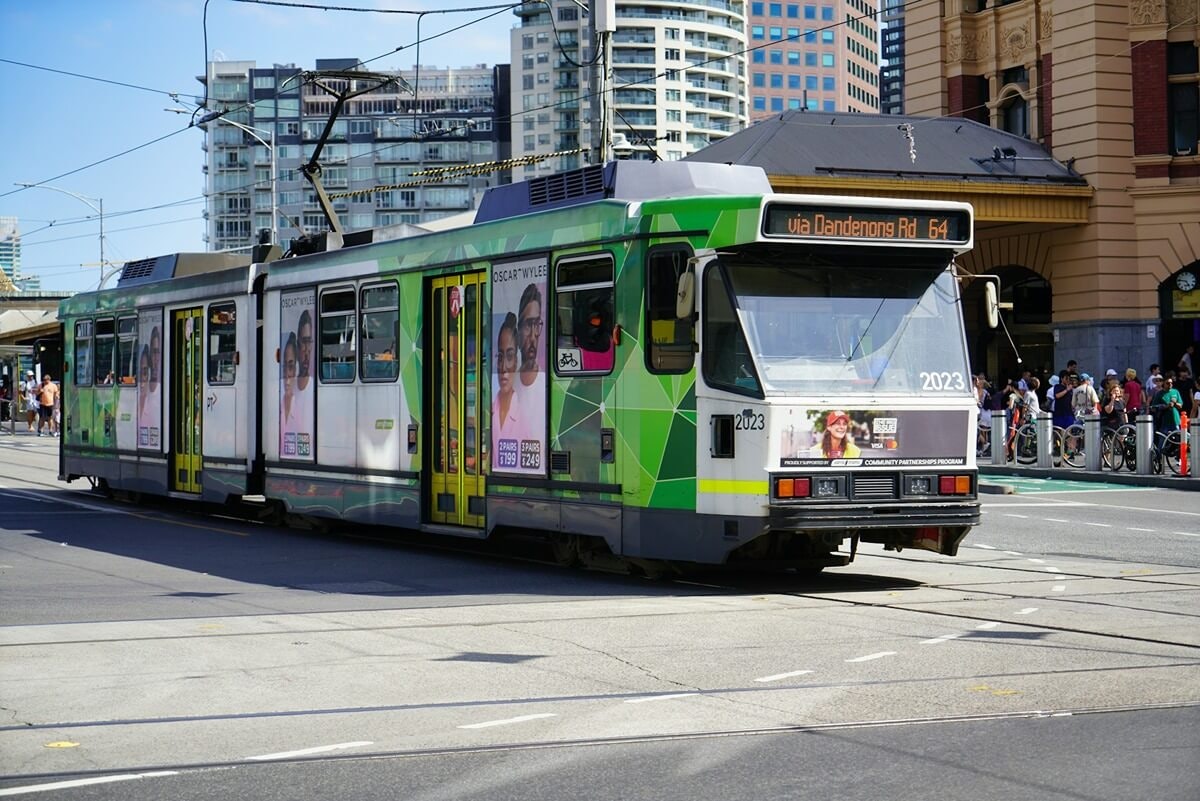
Best for: getting around the CBD, reaching places where there's no nearby train station, and exploring Melbourne's inner neighbourhoods.
Watch out for:
Traffic delays — trams share the road with cars and can run significantly late during peak hours
If you have an important appointment, check the TramTracker app in advance
Melbourne is world-famous for its trams, and for good reason. The network covers almost the entire city centre and extends into several suburbs not yet reached by train.
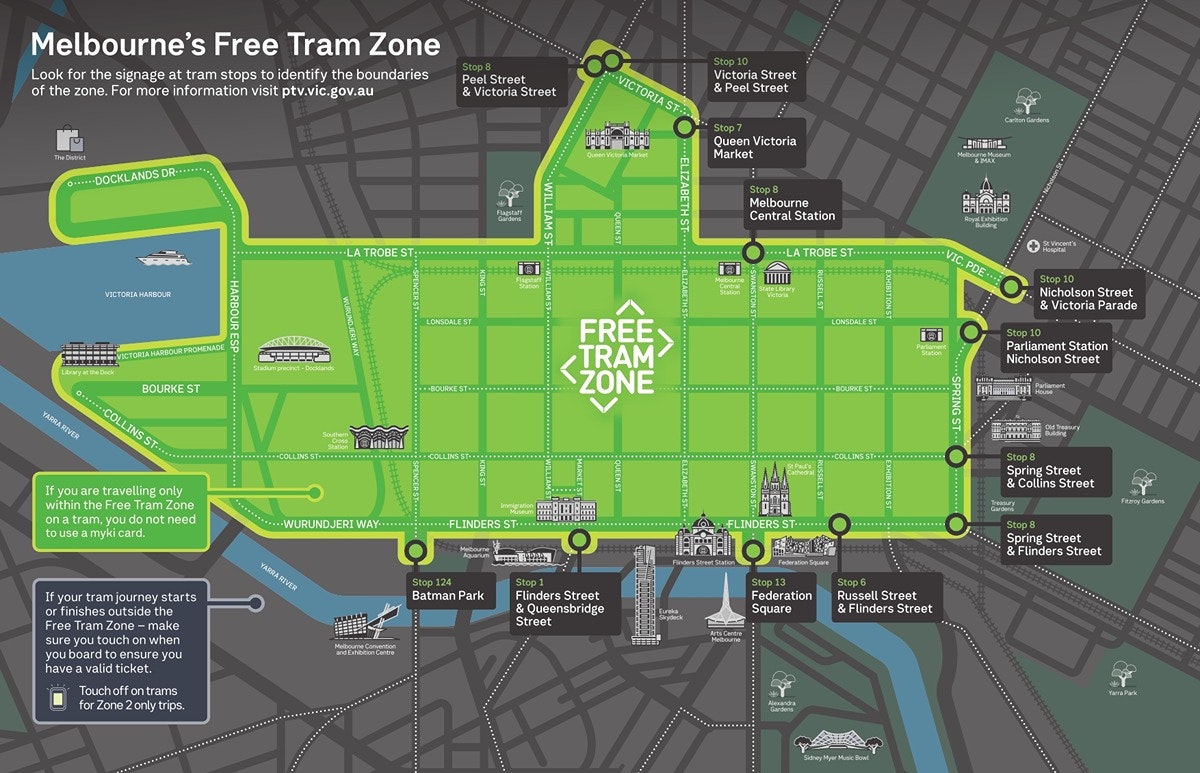
Free Tram Zone in the CBD: within the city centre boundaries, all trams are completely free. You don't need to Touch On as long as you stay within that zone. You can hop on and off as many times as you like at no cost. Learn where the zone boundaries are — it's one of the most useful money-saving tips for anyone living in Melbourne.
Buses
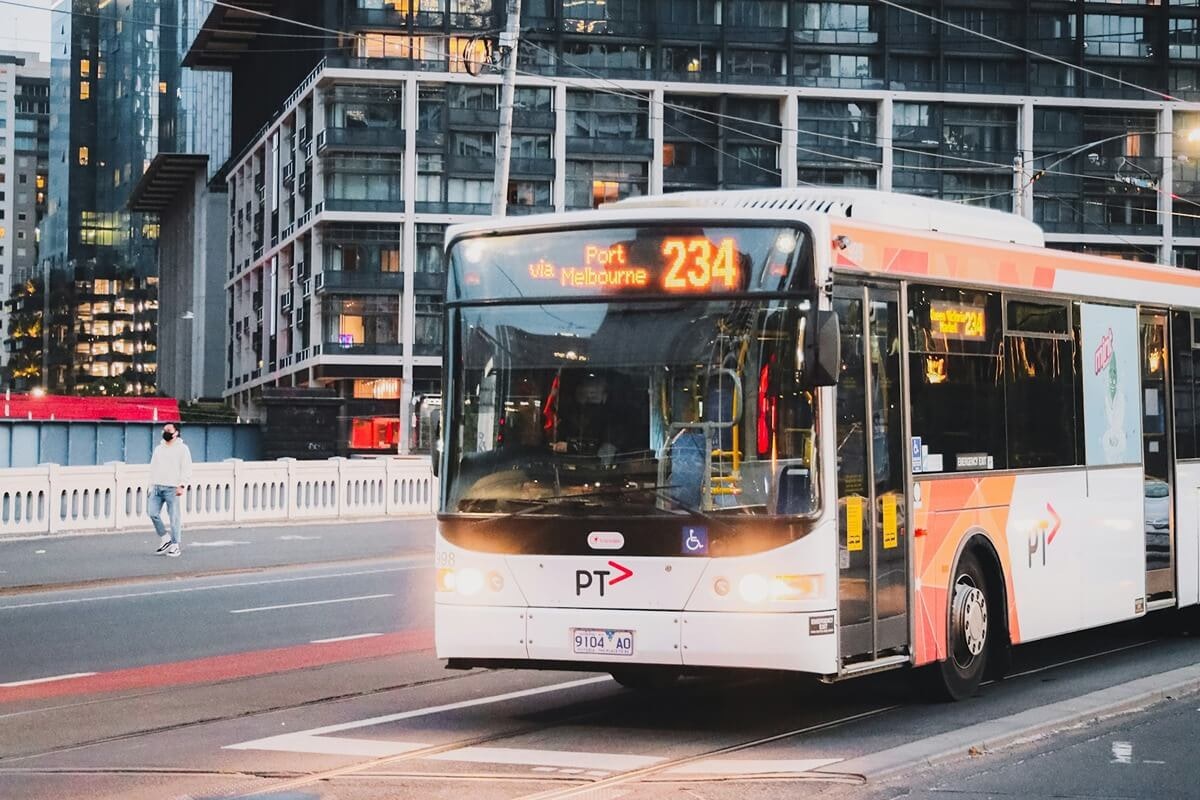
Best for: reaching areas with no access to train or tram. They play an important role in the system, especially in suburbs further from the city centre.
Watch out for:
They're the least reliable in terms of timing — they can take a long time to come and real-time tracking isn't always available
Always board through the front door to Touch On — the back door is for exiting only
General recommendation: avoid them if you have another option. But when you need them, you need them.
Tips and Tricks
Check which direction the tram is going before you board
Tram stops usually have two platforms, one on each side of the road, for each direction. It sounds obvious, but it's easy to get on the one going the wrong way — especially on long streets with multiple lines. I wasted a lot of time doing exactly that when I first arrived. Check the route number and direction on the tram's display before stepping on.
Lina's experience
This one might sound silly, but every day you will see tourists and even some residents mistakenly get on a tram going in the wrong direction and have to get off again at the next stop (looking a little embarrassed)! Normally the stops to wait for the tram are opposite each other, but the trams can take very winding routes through the cities so the direction of the tram might not be the direction of its final destination. Always be very careful and double check the name on the front of the tram - it should be the name of the final stop in the direction you are travelling. I personally was late a few times falling for this one!
Download these two apps on day one
PTV App (iOS | Android) — for planning any trip. Enter your origin and destination and it tells you exactly what to take, where to transfer and how long to wait. It also alerts you if a line is closed for maintenance. You can top up your Myki, check your balance and register your card all from this app.
TramTracker (iOS | Android) — exclusively for trams. Shows you in real time where the next three trams on your route are. So you know whether you need to run or can walk calmly to the stop.
Get a concession Myki if you're eligible
If you qualify for a concession, your fare is cut in half. Some examples:
International students studying full-time for a diploma, advanced diploma or undergraduate university program → can access the International Student Travel Pass
Citizens or permanent residents studying full-time in tertiary education → may be eligible for a tertiary concession (check with your educational institution)
Under 18s → free travel from 2026 (youth Myki card, $5)
Unfortunately, students studying part-time English courses generally don't qualify for concessions. But it's always worth asking at your school.
Watch out for ticket inspectors
PTV has inspectors across the network — on trams, trains and buses — checking that everyone has touched on. Some wear uniforms and are easy to spot. Others are in plain clothes.
Their method: they wait for the doors to close, show their ID, then move through the vehicle with a device that checks whether your Myki is active. If you didn't Touch On or your balance is negative, you get an on-the-spot fine. There's no way around it once they're on board. The solution is simple: always Touch On before you sit down.
In Conclusion
Melbourne's public transport is one of the best things about living in this city. Once you get into the rhythm — Myki topped up, apps downloaded, tips in mind — it becomes a natural part of your daily routine.
The learning curve is short. Within a month you'll be moving around like a local.
And if you're moving to Melbourne with family, remember the big 2026 update: under 18s travel free. It's a detail that makes a real difference to the monthly budget.
Related Content
Related Articles
Everything you need to know about living in Melbourne
You are looking to live in Australia but have not yet decided the perfect city? In this guide we will explore 15 compelling reasons why Melbourne could be the best choice for your new home. From its vibrant culture and diverse neighborhoods and high quality of life, Melbourne offers something for everyone.
Where to live in Melbourne? City vs. Suburbs
Are you searching for accommodation in Melbourne but unsure about the best location for your needs? Find out where is best to live in Melbourne and aspects to consider before making the decision.
Everything you need to know about living in Melbourne
You are looking to live in Australia but have not yet decided the perfect city? In this guide we will explore 15 compelling reasons why Melbourne could be the best choice for your new home. From its vibrant culture and diverse neighborhoods and high quality of life, Melbourne offers something for everyone.
Where to live in Melbourne? City vs. Suburbs
Are you searching for accommodation in Melbourne but unsure about the best location for your needs? Find out where is best to live in Melbourne and aspects to consider before making the decision.